For most of the twentieth century, structural biology moved at the pace of crystals and beamlines. Determining the three-dimensional shape of a single protein could take a graduate student years — growing crystals, collecting diffraction data, solving the phase problem, iterating through refinement. The PDB, the global repository of solved structures, grew steadily, but the rate was always dwarfed by the number of sequences waiting to be understood. The gap between what we could sequence and what we could see had opened into a chasm.
The conventional wisdom was that closing this gap would take generations. Physics-based folding simulations were improving, but remained computationally intractable for most proteins of biological interest. Homology modelling worked where a close structural relative was already known, but offered nothing for novel folds. Machine learning methods were beginning to show promise in the mid-2010s, but even the optimists calibrated their expectations in decades. The protein folding problem, posed formally in the 1960s, felt like a fixture of the unsolved.
The AlphaFold moment
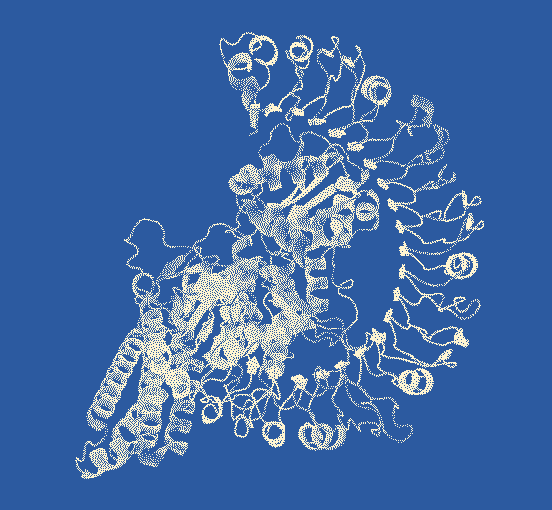
In 2020, DeepMind's AlphaFold 2 entered CASP14 — the biennial assessment of protein structure prediction methods — and did not simply win. It made the competition effectively unnecessary. Its predictions on previously unseen proteins matched experimentally determined structures to within the margin of error of the experiments themselves. The field, accustomed to incremental progress measured in fractions of an angstrom, encountered something that felt categorically different. Within months, the paper had been released, the code made public, and a database of predicted structures for virtually every known protein was freely available.
AlphaFold did not move the needle. It moved the field to a different instrument entirely — one where the needle starts much further along.
What it solved — and what it left open
AlphaFold solved the monomer problem with exceptional fidelity. Given a protein's amino acid sequence, it can now produce a confident structural prediction for the vast majority of proteins in a matter of minutes. This is a genuine scientific achievement, one that is already reshaping drug discovery, enzyme engineering, and basic molecular biology. Labs that once spent months on structure determination now begin with an AlphaFold prediction and focus experimental effort on the residues that remain uncertain.
But AlphaFold's strengths also illuminate the dimensions of the problem that remain. Single-chain prediction, even at high accuracy, does not tell you how proteins find each other in the crowded cellular environment, how they assemble into multi-subunit complexes, or how those complexes change conformation in response to signals. The cell does not operate through lone proteins. It operates through machinery — coordinated assemblies that emerge only when multiple chains come together. The question of quaternary structure, the architecture of complexes, remains substantially open.
How this shaped our direction
At Jäntra, the AlphaFold moment was not a moment of discouragement but of orientation. It established a new baseline. With monomeric structure largely solved, the frontier shifted clearly to complexes: predicting which proteins interact, at which interfaces, with what stoichiometry, and with what resulting shape. This is the problem we are working on — not as a distant aspiration, but as a concrete technical programme with specific milestones. AlphaFold demonstrated that deep learning can internalize the statistical logic of protein structure at a depth previously unimaginable. We intend to bring the same rigour to the next layer of the problem.